Introduction: The Evolving Challenges in Current Measurement for Photovoltaic Inverters
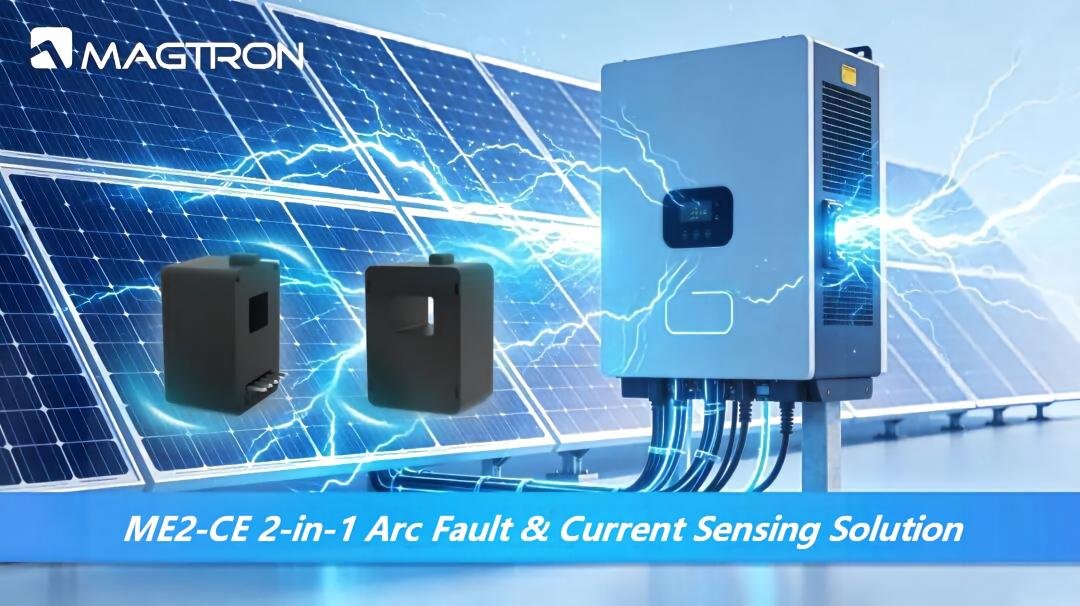
In recent years, photovoltaic inverters have undergone significant advancements in system efficiency and power density. The widespread use of wide bandgap devices, such as SiC, has driven a dramatic increase in switching frequencies, resulting in more compact equipment and a shift towards smaller, more integrated system structures. As a result, current measurement—essential for inverter control and protection—faces new challenges, particularly in terms of stability and reliability. Drawing from recent project experiences, this article highlights the importance of current sensors in photovoltaic applications and provides guidance for avoiding potential risks during the research, development, and system design phases.
1. Impact of High-Frequency Switching on Current Measurement Stability
One of the key factors influencing current measurement in photovoltaic inverters is the high-frequency switching environment. While wide bandgap devices improve system efficiency, they also introduce significantly higher dv/dt and di/dt levels. This increased frequency can lead to high-frequency noise being coupled into the current sampling process through parasitic capacitors, ground loops, and other pathways.
If the current sensor lacks sufficient anti-interference capabilities, these disturbances can cause output fluctuations or zero offsets. In the context of current loop control, such unstable signals can reduce phase margin and hinder dynamic response. Based on engineering practice, current sensors with closed-loop compensation structures and magnetic cores that operate near zero magnetic flux states are better equipped to maintain stable outputs in these challenging electromagnetic environments.
2. Low-Current Performance and Its Effect on System Efficiency
Another critical issue is the performance of current sensors in the low current range. Photovoltaic inverters typically do not operate at full capacity for extended periods and often function under partial load or low light conditions. In these circumstances, the accuracy of the Maximum Power Point Tracking (MPPT) algorithm in detecting changes in current directly impacts energy capture efficiency.
If the sensor exhibits excessive noise or lacks resolution in the low-current range, even if it performs well at the rated current, it will fail to meet the system control requirements. Therefore, it is essential to assess the effective accuracy and repeatability of sensors in the commonly used current range, based on the actual current distribution observed during operation.
3. The Effect of Installation Structure on Measurement Accuracy
As photovoltaic inverters become more compact, the installation of current sensors is often constrained by space limitations. The positioning of busbars, the varying currents of adjacent power modules, and heat dissipation structures can all impact the local magnetic field distribution.
If the magnetic circuit design or installation method is not optimized, it can introduce errors and lead to inconsistent performance across different units. To improve the consistency and repeatability of measurements, engineers should focus on optimizing magnetic circuit closures, planning busbar directions carefully, and conducting thorough verification during the design phase.
4. Matching Sensor Dynamics with Control Strategies
A growing concern is the mismatch between the dynamic characteristics of current sensors and the control strategies used in photovoltaic inverters. Some applications prioritize bandwidth indicators when selecting sensors but overlook the impact of sensor phase delay and filtering characteristics on the control loop.
Insufficient bandwidth can limit the system’s response speed, while excessive bandwidth without proper filtering may introduce high-frequency noise. A thorough evaluation of sensor dynamics, in combination with control algorithms and sampling frequencies, should be conducted during the research and development phase, rather than relying on a single performance metric.
5. Long-Term Stability and Reliability of Current Sensors
The long-term stability of current sensors is becoming a vital consideration for the reliability of photovoltaic systems. With equipment typically designed for a lifespan of over 20 years, the stability of the magnetic core material and electronic components under high-temperature, long-term load, and temperature cycling conditions directly impacts the measurement results.
Slow zero drift, which may not be noticeable in short-term testing, can gradually amplify over extended periods of operation, ultimately affecting system efficiency and measurement accuracy. As such, temperature characteristics and long-term reliability should be prioritized during the evaluation process, rather than focusing solely on initial performance indicators.
Conclusion: Improving System Reliability Through Effective Current Measurement
As photovoltaic inverters continue to evolve towards higher power density and switching frequencies, current measurement has become a crucial aspect of system design. By considering the selection and application of current sensors from a system-wide perspective and conducting thorough verification against real-world operating conditions, the overall performance and reliability of photovoltaic equipment can be significantly enhanced.