Skip to content

PV inverters, serving as the core component and control center of photovoltaic systems, perform the critical dual roles of:
Converting DC power from PV arrays into grid-compliant AC power
Implementing Maximum Power Point Tracking (MPPT) to maximize energy harvest
Technical Imperatives:
Pmax Operation: The operational proximity to the photovoltaic module’s Maximum Power Point directly determines plant revenue generation.
MPPT Functionality: Essential for dynamically optimizing power extraction under varying irradiance/temperature conditions.化。
1.Maximum Power Point (MPP) of Photovoltaic Modules

Figure: Residential Photovoltaic System
Figure 1 depicts a typical residential photovoltaic system. Solar modules generate DC power upon sunlight exposure, which is converted to AC power by the inverter. During peak demand, this electricity powers household loads; during low demand, surplus energy is automatically redirected to the grid, generating revenue.
Power output and revenue are influenced by:
- Solar irradiance
- Ambient temperature
- Operating power point
MPPT’s core objective:
As the controllable factor, the operating power point is leveraged in PV inverter control to maximize efficiency. MPPT algorithms dynamically maintain module operation at the Maximum Power Point (MPP).
Below: I-V characteristic curve of PV modules

Figure 2: I-V Characteristic Curve of PV Modules

Figure 3: P-V Characteristic Curve of PV Modules
PV modules exhibit nonlinear output characteristics, as evidenced by their I-V and P-V curves. At a specific operating point, the product of voltage (Vmp) and current (Imp) yields maximum power (Pmax)—the Maximum Power Point (MPP).
MPPT Implementation:
Inverters dynamically adjust circuit topologies to maintain PV module operation at the MPP through Maximum Power Point Tracking.
PV Inverter Structure:
Protection Circuit
Input Circuit
Output Circuit
Main Inverter Switching Circuit
Control Circuit
Auxiliary Circuit
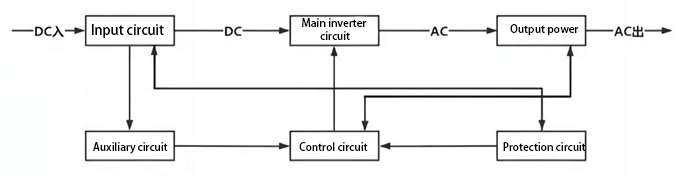
Figure 4: Basic structure diagram of inverter
Input Circuit: Primarily performs DC-DC conversion to provide a DC operating voltage for the main inverter circuit, ensuring its normal operation. This is where MPPT (Maximum Power Point Tracking) is performed.
Main Inverter Circuit: The core of the inverter unit. This circuit achieves the inversion function through the turn-on and turn-off of power electronic switches. These can be classified as isolated or non-isolated.
Output Circuit: Modifies, compensates for, and regulates the AC waveform (shape, frequency, voltage, current magnitude, and phase) output by the main inverter circuit.
Control Circuit: Provides a series of control pulses to the main inverter circuit to govern the turn-on and turn-off of the inverter switching devices, cooperating with the main circuit to accomplish the inversion function.
Auxiliary Circuit: Converts the input voltage into a DC voltage suitable for the control circuit’s operation. It includes various detection circuits.
Protection Circuit: Primarily includes input over/under voltage protection, output over/under voltage protection, overcurrent protection, short-circuit protection, leakage current protection, islanding protection, etc.
2.MPPT Technology Principle
Currently, the MPPT function in inverters is typically implemented by the control circuit generating PWM signals to regulate the DC/DC conversion process, ensuring operation at the maximum power point. The principle block diagram is shown in the figure below, where the load represents the equivalent impedance of the subsequent circuit.
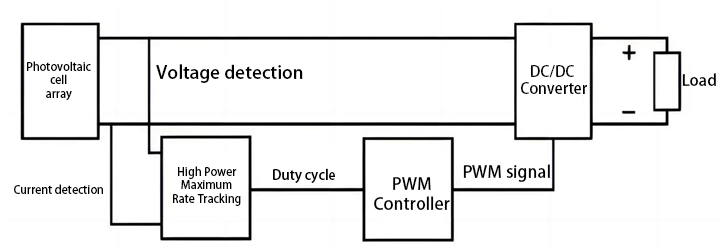
Figure 5: MPPT Functional Block Diagram
The diagram below shows a simplified photovoltaic MPPT system, comprising a PV string and a variable load.
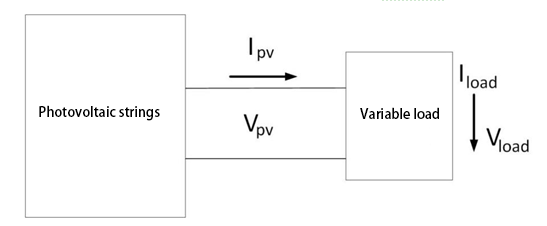
Figure 6: Simplified Photovoltaic System
In the system, the PV string and variable load form a closed loop, with the PV string acting as the power supply. Here, the output voltage (V<sub>pv</sub>) and output current (I<sub>pv</sub>) of the PV string are equal to the voltage (V<sub>load</sub>) and current (I<sub>load</sub>) of the variable load, respectively.
The Maximum Power Point (MPP) condition is achieved when R<sub>pv</sub> = R<sub>load</sub> (i.e., load impedance matches the internal resistance), satisfying the maximum power transfer theorem. Thus, adjusting the resistance value (R<sub>load</sub>) of the variable load shifts the operating point.
As shown in the figure below, when R<sub>load</sub> meets the impedance matching condition, the operating point moves to the Maximum Power Point (MPP), maximizing the power generation efficiency of the PV modules.
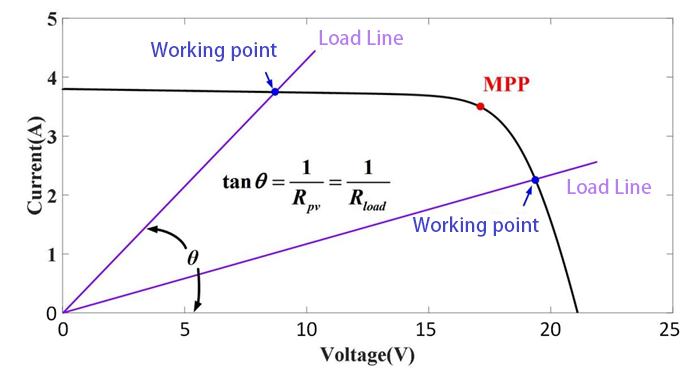
Figure 7: I-V Curve and Maximum Power Point of PV Module
However, in practical scenarios, R<sub>load</sub> is often uncontrollable, making direct adjustment of the load resistance impractical. Therefore, a DC-DC converter can be inserted between the PV string and the load, as shown in the figure below, where *d* represents the duty cycle of the DC-DC converter.
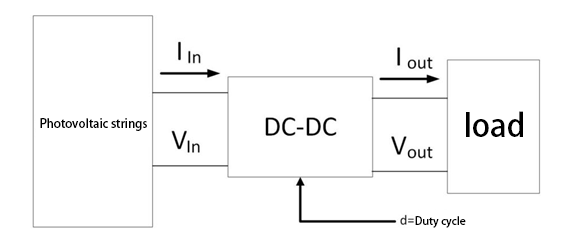
Figure 8: Schematic Diagram of DC-DC Converter Placement in PV System
Assuming the voltage conversion ratio of the DC-DC converter is M(*d*), we obtain the input-output voltage relationship:

Assuming the conversion efficiency of the DC-DC converter is η, we have:

Substituting the previous equation into the following one yields:

where R<sub>in</sub> and R<sub>out</sub> are the equivalent input resistance and equivalent output resistance, respectively.
In the PV system, R<sub>load</sub> = R<sub>out</sub>. At the Maximum Power Point (MPP), the condition R<sub>in</sub> = R<sub>pv</sub> must be satisfied, leading to the equation:

The above equation demonstrates that for a fixed output load R<sub>load</sub>, we can adjust the conversion ratio M(*d*) of the DC-DC converter by regulating the duty cycle *d*. This enables dynamic control of the equivalent load impedance (R<sub>in</sub>) seen by the PV string, thereby forcing the PV array to operate at its Maximum Power Point (MPP).
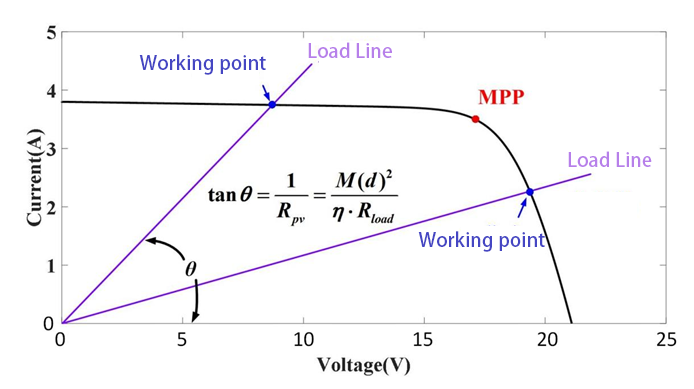
Figure 9: I-V Curve and Maximum Power Point of PV Module
It should be noted that different DC-DC topologies exhibit distinct voltage conversion ratios M(*d*), as listed in the table below:
| Buck | Boots | Buck-Boots | |
| M(d) | d | 1/(1-d) | -d/(1-d) |
In practical implementations, MPPT controllers are generally divided into two control methodologies: the Voltage Control Method and the Direct Power Control Method, as illustrated in the figure below:
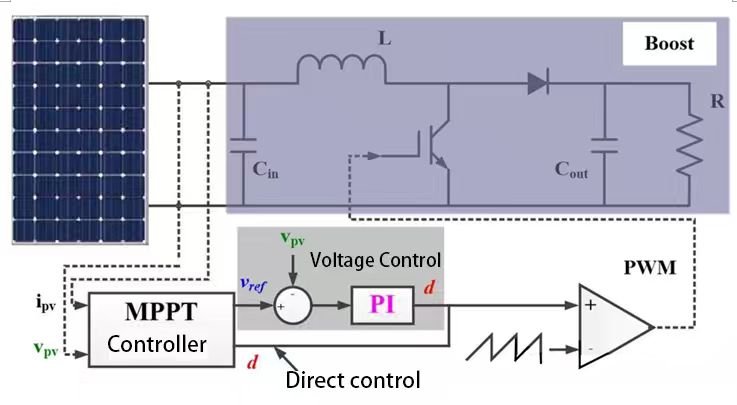
Figure 10: Schematic Diagram of MPPT Controller Control Methodologies
For the voltage control approach, the MPPT algorithm within the MPPT controller, such as the Perturb and Observe method, generates a reference voltage signal Vref. This Vref is then compared with the voltage signal Vpv currently sampled by the MPPT controller. The resulting error signal is fed into a PI controller, which outputs the DC-DC duty cycle d. This duty cycle d is subsequently compared with a triangular wave to generate the PWM signal for controlling the DC-DC converter.
Achieving stable operation under varying irradiance and temperature conditions requires substantial debugging effort to tune the PI controller parameters, making the voltage control approach relatively cumbersome to implement. In contrast, the direct control approach eliminates the need for PI controller design. Instead, the algorithm within the MPPT controller directly generates the duty cycle d to produce the PWM signal. Consequently, the direct control approach offers significant advantages in terms of implementation difficulty and cost. This is why the vast majority of MPPT algorithms designed in recent years are based on this method.
3.Current Measurement
At its core, whether employing the voltage control approach or the direct control approach, the MPPT algorithm achieves maximum power point tracking by adjusting the duty cycle d.
The precision of MPPT control is influenced not only by the performance of the internal algorithm but also critically depends on the accuracy of the current and voltage measurements obtained by the sensors within the inverter’s sensing circuit at both input and output terminals.
The various current and voltage sensors within this sensing circuit are illustrated below:
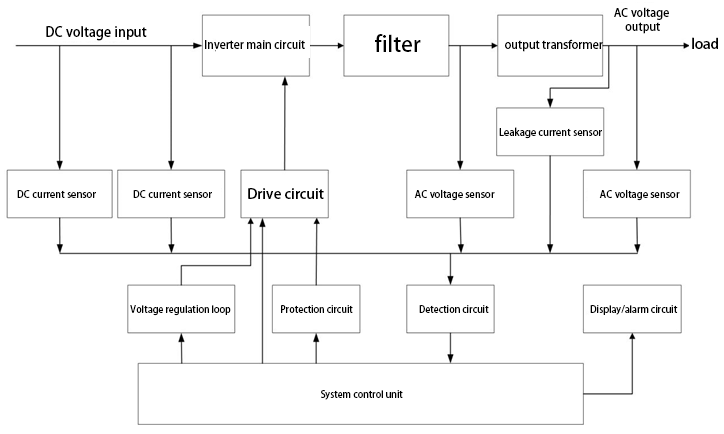
Figure 11: Block Diagram of Inverter Sensing Circuit
To a certain extent, the performance ceiling of sensors directly determines the ceiling of a photovoltaic system. Magtron Intelligent Magnetic Technology Co., Ltd. has independently developed current sensing and leakage current sensing modules based on its proprietary SoC chip solution. Focusing on industrial applications such as new energy PV inverters, power supplies, and frequency converters, the company delivers commercial solutions for isolated current sensing spanning from ampere-level to microampere-level measurements.
The company’s full range of high-precision closed-loop fluxgate current sensors and open-loop Hall-effect sensors have undergone comprehensive upgrades. High-precision closed-loop fluxgate sensors including models MCSA-25S P, MCSB-100S P, and MCSC-200S P utilize customized chips paired with high-sensitivity magnetic cores. These sensors achieve:
Linearity: ±0.1%
Providing high-precision current data acquisition for MPPT circuit design in photovoltaic inverters.
Measurement accuracy: ±0.7%

Simultaneously, the company’s newly upgraded ME and MG series open-loop Hall-effect current sensors, combined with the RCMU101SN series leakage current sensors, deliver comprehensive current and leakage current sensing capabilities for both the string-side inputs and AC outputs of inverters. This integrated solution provides a highly cost-effective, complete current sensing system for photovoltaic inverter design.


References:
[1] Li Xing, Wen Huiqing. Research on Variable-Step MPPT Control Based on B-Parameter. Power System Protection and Control, 2016, 44(17): 58-63.
[2] How to Design Inverters in Photovoltaic Power Systems. Big-Bit, December 12, 2012.
[3] Principles, Functions, and Algorithms of MPPT in Inverters. Solarbe, January 9, 2018.
[4] M. Killi and S. Samanta, “An Adaptive Voltage-Sensor-Based MPPT for Photovoltaic Systems with SEPIC Converter Including Steady-State and Drift Analysis,” IEEE Transactions on Industrial Electronics, vol. 62, no. 12, pp. 7609–7619, Dec. 2015.
[5] X. Li, H. Wen and Y. Hu, “Evaluation of Different Maximum Power Point Tracking (MPPT) Techniques Based on Practical Meteorological Data,” 2016 IEEE International Conference on Renewable Energy Research and Applications (ICRERA), Birmingham, 2016, pp. 696–701.
[6] Y.-H. Liu, J.-H. Chen, and J.-W. Huang, “A Review of Maximum Power Point Tracking Techniques for Use in Partially Shaded Conditions,” Renewable and Sustainable Energy Reviews, vol. 41, pp. 436–453, 2015.
[7] K. Ishaque and Z. Salam, “A Deterministic Particle Swarm Optimization Maximum Power Point Tracker for Photovoltaic System Under Partial Shading Condition,” IEEE Transactions on Industrial Electronics, vol. 60, no. 8, pp. 3195–3206, Aug. 2013.