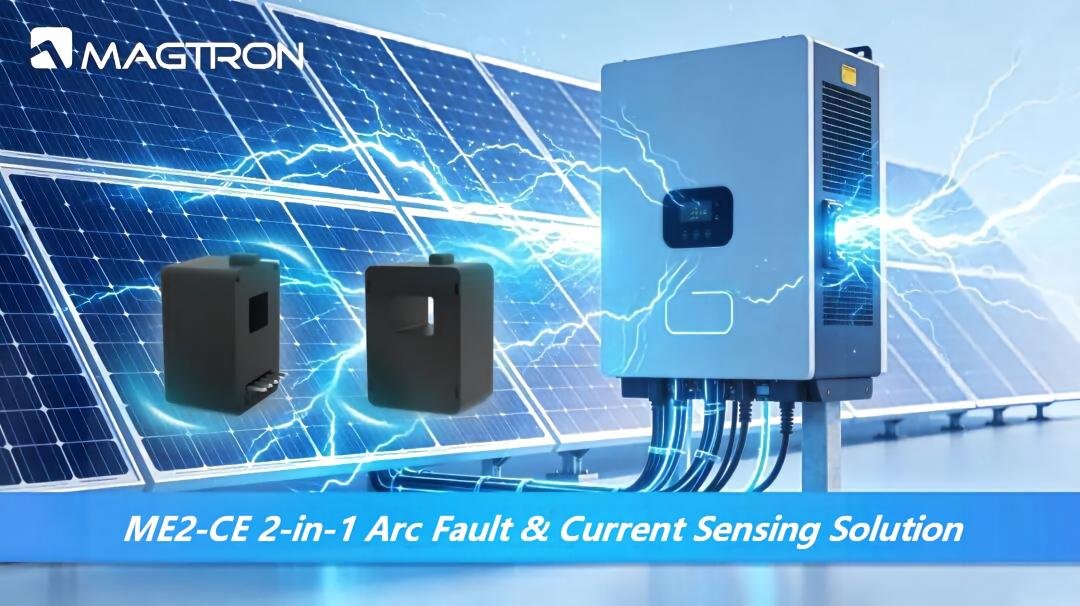
In the technological evolution of power electronics equipment, current sensors—core sensing components —play a decisive role in system architecture design, cost control, and overall performance depending on their selection and upgrade strategy.
From photovoltaic inverters to industrial motor servo drives, industry demand for current sensing is rapidly evolving toward “low cost, simplified architecture, and high compatibility.” Open-loop Hall current sensors, with their advantages in structure, cost efficiency, and system integration, are gradually replacing traditional closed-loop fluxgate solutions and have become a preferred option for system upgrades.
This article focuses on two key application scenarios—photovoltaic inverters and industrial motor servo drives—to analyze the technological upgrade logic and practical implementation of current sensing solutions, providing reference for engineering selection.
1. Photovoltaic Inverter Applications: Multi-Node Evolution with Open-Loop Hall as the Mainstream Trend
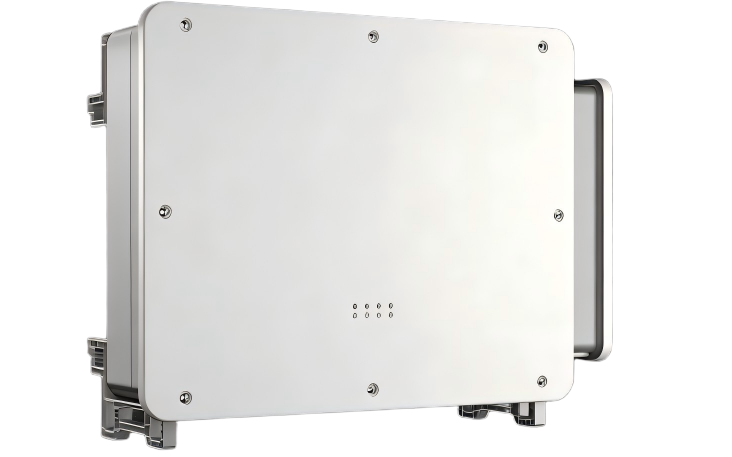
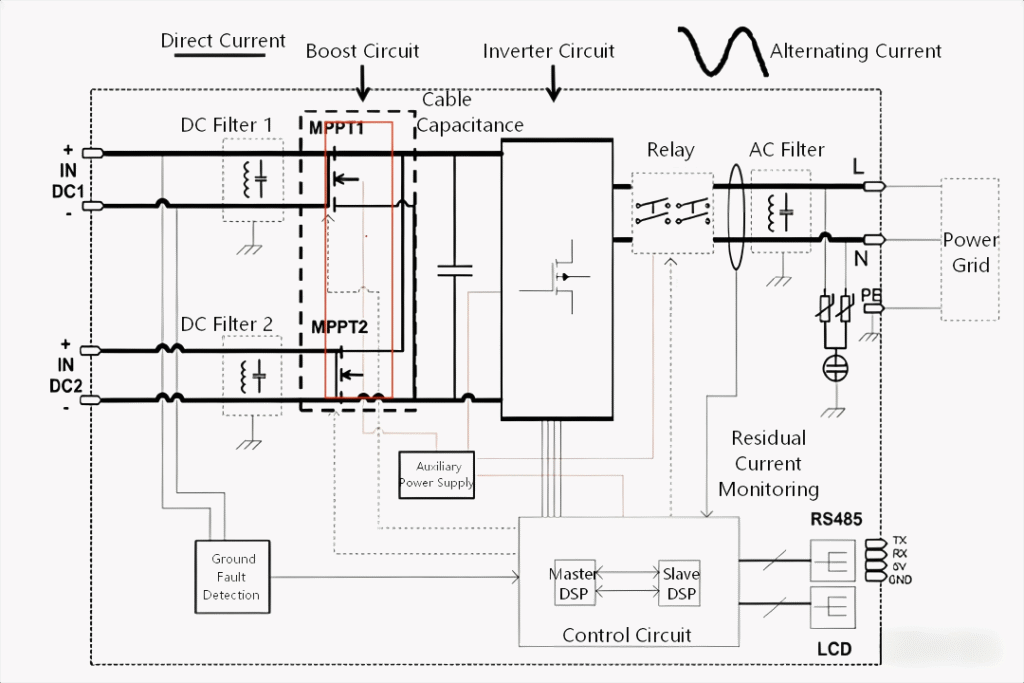
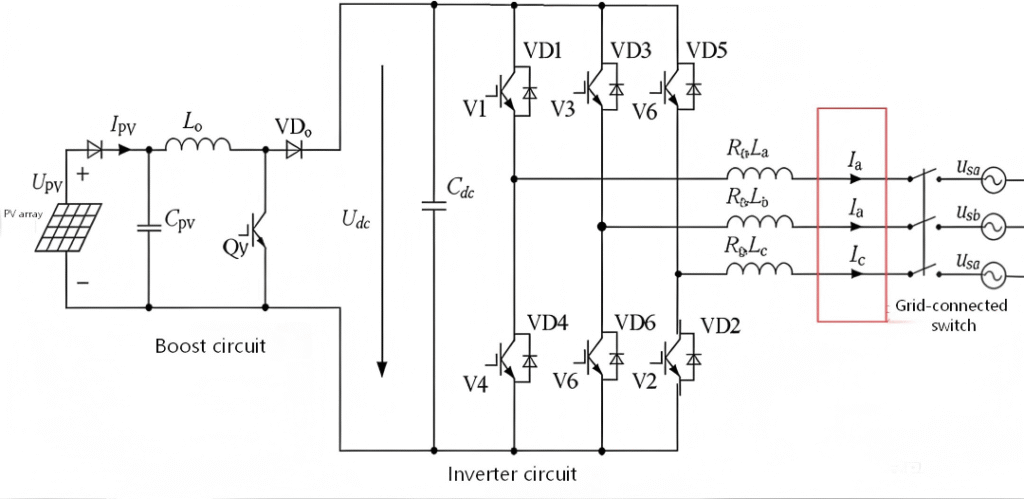
As the “heart” of photovoltaic systems, inverters contain multiple key current detection nodes, including string, MPPT (Maximum Power Point Tracking), Boost, and AC-side circuits. Each node has different requirements for current sensing.
Driven by industry trends toward cost optimization and simplified architecture, current sensors are undergoing a full transition:
- from closed-loop to open-loop
- from discrete to integrated design
- from dual-power supply to single-power supply systems
Open-loop Hall current sensors, with strong adaptability and cost-effectiveness, have become the core solution for node upgrades.
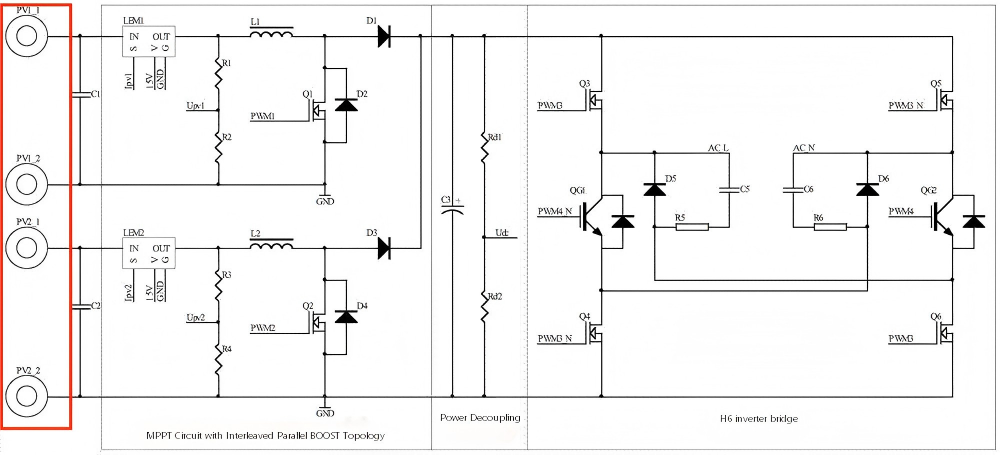
2. String Measurement Node: Performance and Cost Optimization with Through-Hole Open-Loop Hall Solution
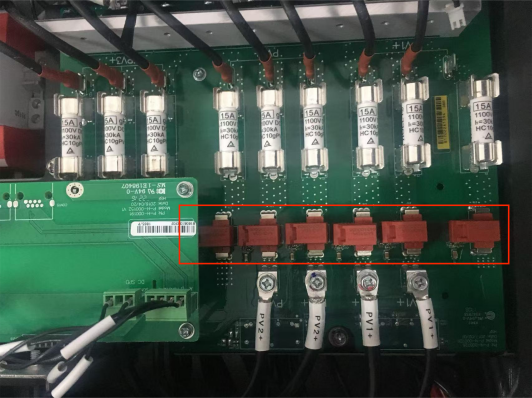
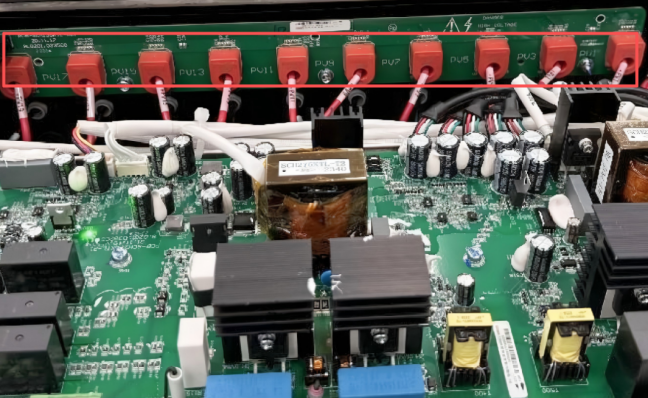
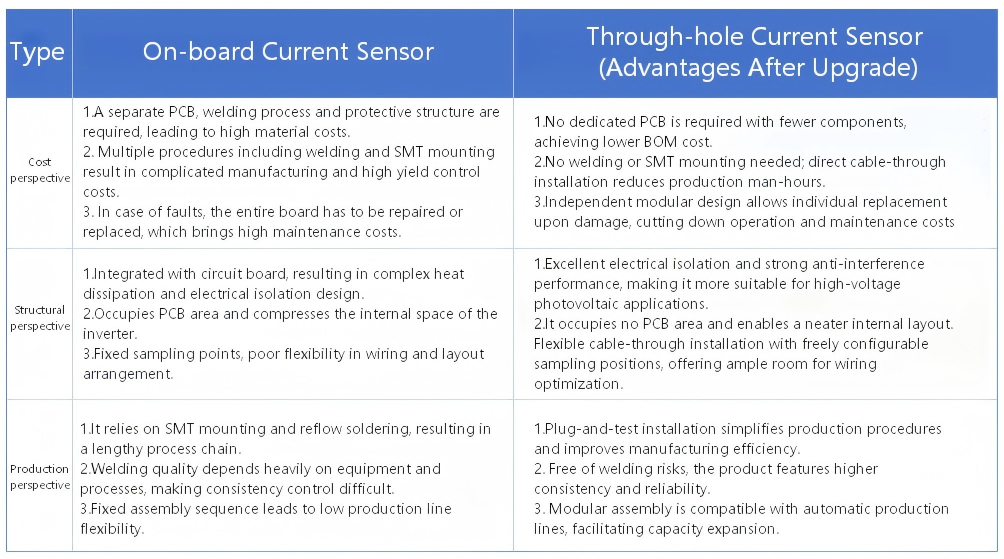
Early photovoltaic inverter string current measurement typically used traditional PCB-mounted solutions. These were later upgraded to through-hole designs.
Compared with traditional approaches, through-hole designs offer:
- better alignment with industrial installation requirements
- significantly improved ease of assembly and maintenance
- further reduction in overall system cost
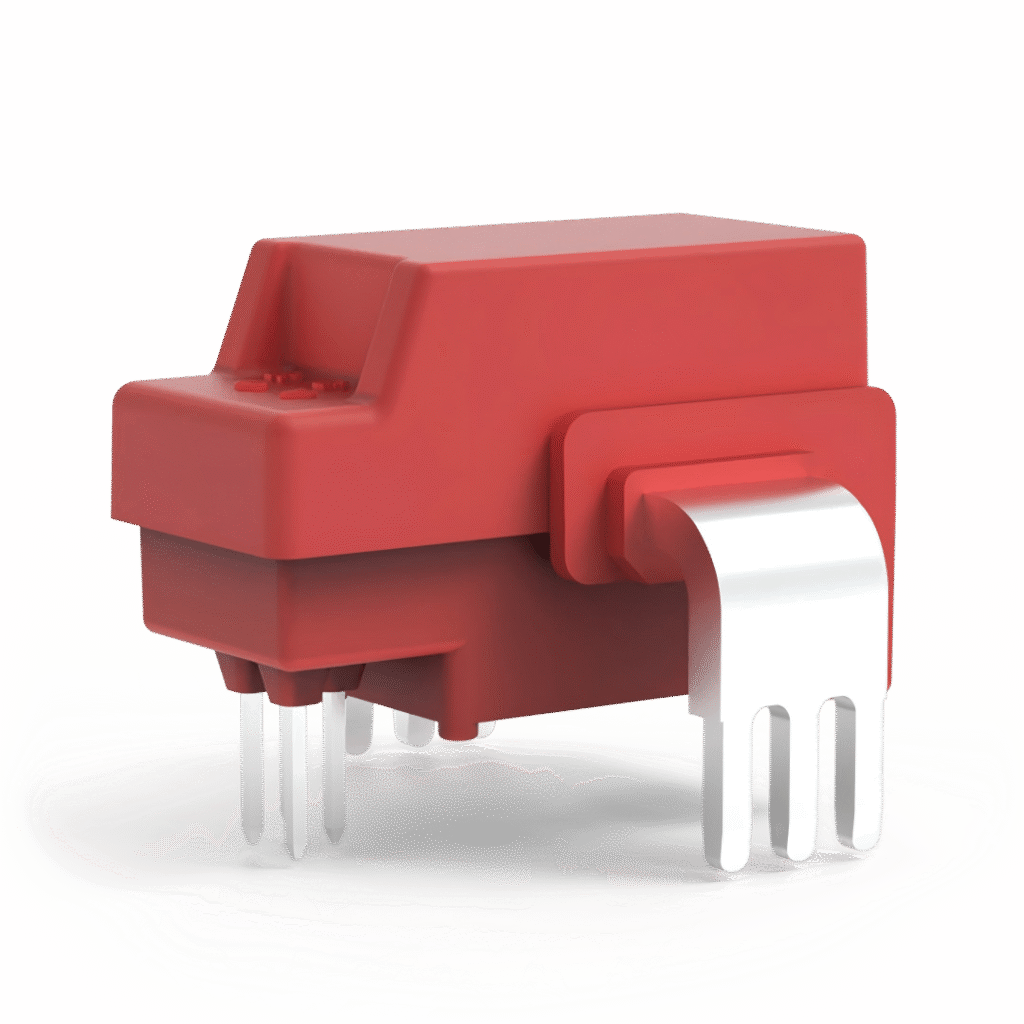
The ME series from JUMORE provides a low-cost upgraded solution. Its current range and accuracy are well matched to string-level measurement requirements, making it an optimized choice for string current sensing and now widely deployed in mainstream photovoltaic inverters.

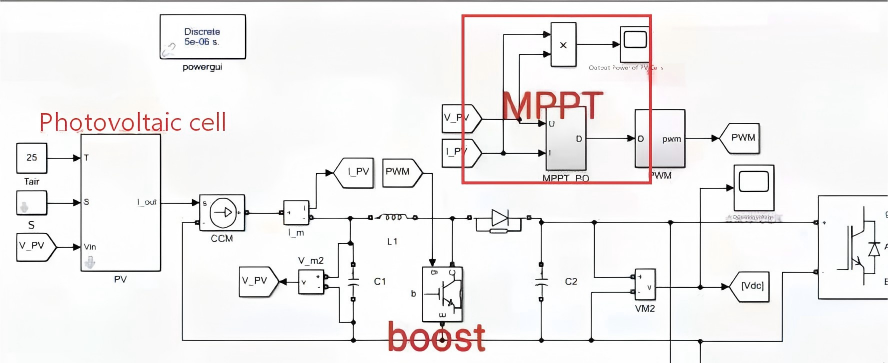
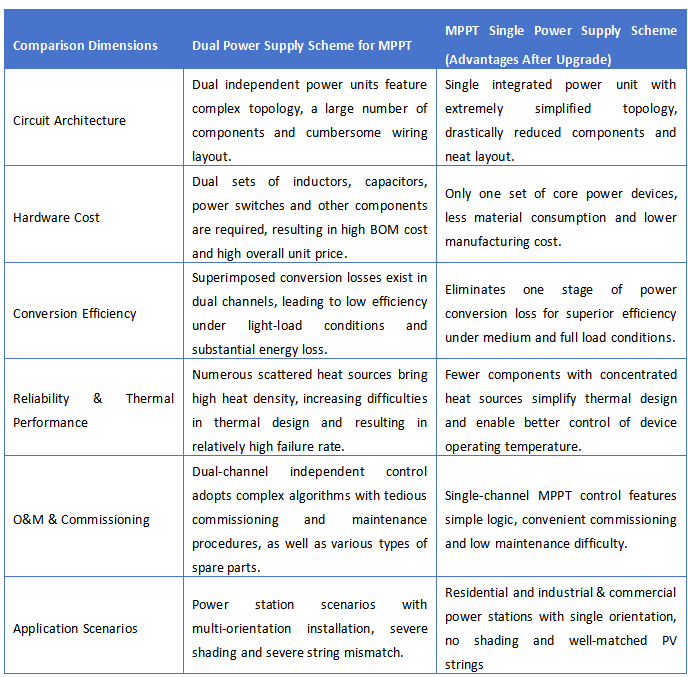
3. MPPT + Boost Combined Nodes: Integrated Single-Power Open-Loop Solution for Cost Reduction and Efficiency Improvement
In MPPT and Boost applications, the key technological shift is:
- from distributed sensing to integrated sensing
- from dual-power closed-loop systems to single-power open-loop architectures
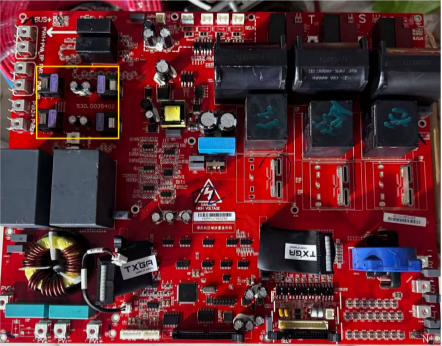
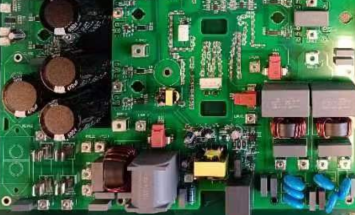
Earlier inverter designs required separate current sensors for MPPT and Boost nodes, both using closed-loop topology and dual power supplies. This resulted in:
- increased internal space consumption
- higher system cost due to duplicated sensing architecture
- greater circuit design complexity
With inverter technology evolution and increasing demand for system integration and cost efficiency, open-loop Hall current sensors now enable integrated measurement of MPPT and Boost nodes.
A single device can satisfy both measurement requirements, while single-power design replaces the traditional dual-power architecture, significantly simplifying circuit structure.
Compared with closed-loop fluxgate solutions, open-loop Hall technology offers better cost efficiency while fully meeting accuracy and response requirements of MPPT + Boost operation.
The upgrade from “two devices, dual power, dual closed-loop” to “one device, single power, single open-loop” not only significantly reduces hardware cost but also simplifies inverter circuit design, making it more suitable for automated mass production.
4. AC-Side Measurement: Gradual Replacement of Closed-Loop Solutions with Scaled Open-Loop Adoption
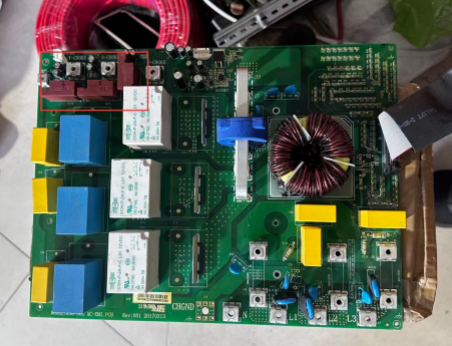
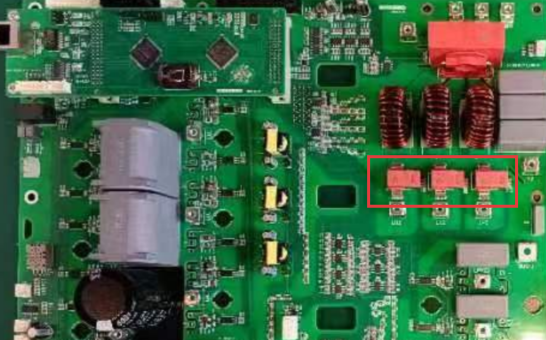
In current photovoltaic inverter designs, some AC-side measurement applications still use traditional low-cost closed-loop fluxgate sensors.
However, the industry trend toward cost reduction is driving a shift toward open-loop Hall solutions.
The MG series open-loop Hall current sensors from JUMORE, with mature design and lower cost, are becoming an ideal replacement for AC-side closed-loop solutions.
Their performance fully meets AC-side current sensing requirements, and they are already being deployed in mainstream inverter brands, becoming a key upgrade direction.
From a system perspective, current sensor selection across photovoltaic inverter nodes consistently focuses on three core requirements:
- cost reduction
- simplified architecture
- high integration
With these advantages, the MG series open-loop Hall sensors provide full-node coverage across string, MPPT + Boost, and AC-side applications, becoming a core enabling component in inverter upgrades.
5. Industrial Motor Servo Drives: Precision Three-Phase Measurement for Demanding Industrial Conditions
In industrial control systems, motor servo drives are core motion control units. Accurate current sensing of UVW three-phase currents directly impacts system precision and stability, making it a critical sensing function in industrial applications.
Consistent with photovoltaic systems, industrial applications are also shifting toward open-loop sensing architectures due to increasing pressure for cost reduction and simplified design.
In servo drive systems, each UVW phase requires independent current measurement. Traditional closed-loop solutions offer high accuracy but suffer from:
- higher cost
- complex system architecture
- limited scalability for mass production
The MG series open-loop Hall current sensors from JUMORE are optimized for industrial applications in:
- accuracy
- bandwidth at normal operating temperatures
- response speed
They fully meet servo drive three-phase current sensing requirements while offering:
- lower system cost compared to closed-loop solutions
- better structural compatibility with industrial layouts
- suitability for automated mass production
The MG series is already deployed in leading industrial automation brands’ servo drive systems, becoming a preferred solution for UVW current measurement and providing strong support for cost reduction and performance optimization.
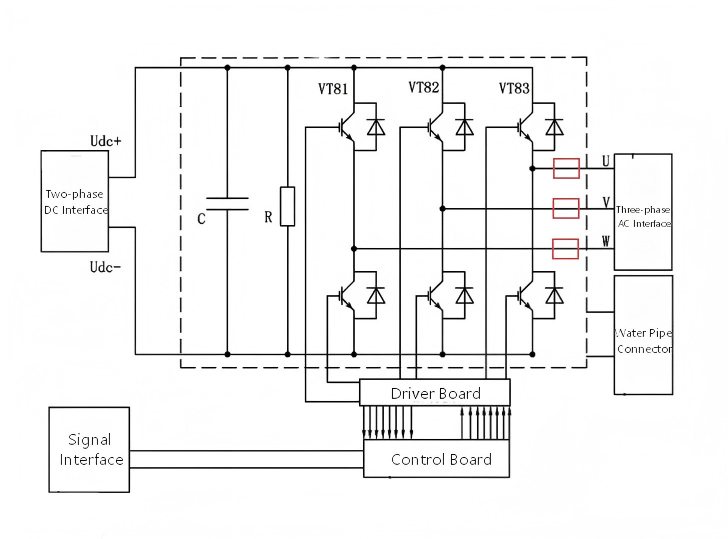
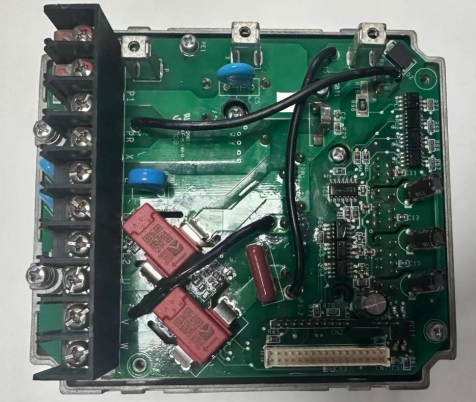
NEW: JUMORE Launches New MG Series
Core Advantages: Structural Upgrade, Smart Manufacturing Upgrade, Performance Upgrade
From photovoltaic inverter multi-node systems to industrial servo three-phase sensing, the new MG series open-loop current sensors have become a preferred upgrade solution across both sectors.
This is driven by three core advantages:
- extreme simplification and efficiency
- intelligent manufacturing
- superior performance
They address industry pain points across design, production, and performance dimensions, enabling cost reduction, efficiency improvement, and performance enhancement.
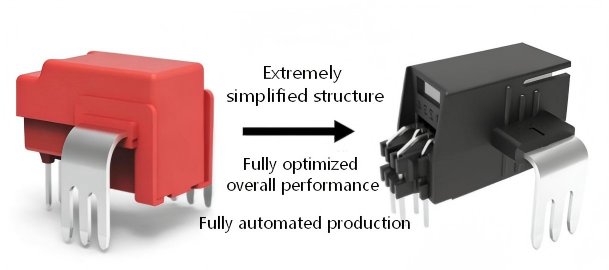
1. Structural Simplification: Simplified Design Enabling Zero-Cost Customer Upgrade
The new MG series is designed around the principle of “extreme simplicity and efficiency.”
By optimizing magnetic circuit design and integrating core components, the internal structure is significantly simplified and redundant mechanical parts are removed.
Benefits include:
- more compact product size
- simplified production workflow
- reduced manufacturing steps
- lower assembly difficulty
- foundation for full automation production
The product follows a strict compatibility philosophy:
- same package
- same pin definition
- same electrical parameters
For photovoltaic inverter and industrial servo manufacturers, this enables:
- no PCB redesign required
- no production line changes
- direct drop-in replacement
This significantly reduces both engineering and time costs, enabling true zero-cost upgrade.
2. Smart Manufacturing Upgrade: Full Automation for Stable Quality and Higher Capacity
The new MG series fully replaces manual production with a complete automated manufacturing system, covering:
- assembly
- pin bending
- trimming
- firmware programming
- performance testing
- laser marking
- final packaging
The production line integrates industrial robots, automated test platforms, and intelligent sorting systems, enabling a fully unmanned manufacturing loop.
Compared to traditional production methods:
- productivity is significantly improved
- unit manufacturing time is greatly reduced
- capacity better matches growing demand in PV and industrial sectors
More importantly, automation ensures:
- strong consistency across batches
- full traceability of test data
- reduced drift and parameter variation
- improved overall reliability
3. Superior Performance: Precision and Reliability for PV and Industrial Applications
Structural simplification and manufacturing upgrades are achieved without compromising performance.
The new MG series uses higher-reliability semiconductor chips and optimized:
- magnetic shielding design
- signal processing algorithms
This results in performance that is:
“equally excellent, yet significantly improved”
Key parameters are optimized to meet leading industry standards, fully addressing diverse application requirements in photovoltaic inverters and industrial servo systems.
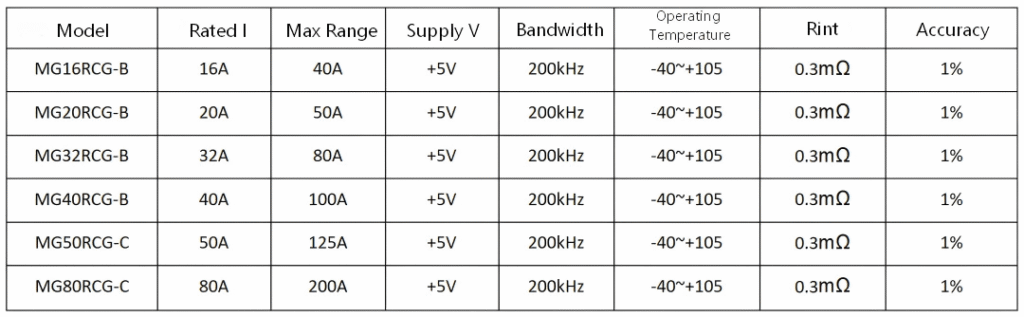
6. Conclusion
Driven by the industry trend toward low cost, high integration, automation, and high performance, current sensor selection is no longer focused solely on accuracy.
Instead, it is evolving toward a balanced optimization of:
- performance and cost
- structure and application scenario
- production compatibility and mass manufacturing
From multi-node integration in photovoltaic inverters to optimized three-phase sensing in industrial servo systems, the new MG series open-loop Hall current sensors have become a mainstream choice in both sectors due to their structural simplification, intelligent manufacturing, and superior performance.
The launch of the new MG series represents a full-dimensional breakthrough in design, production, and performance for open-loop current sensors. Its compatibility enables zero-cost upgrades, automated manufacturing ensures consistent quality and capacity, and its leading performance parameters meet the core requirements of PV and industrial applications.
As photovoltaic and industrial automation industries continue to evolve, the MG series will further expand its application scope and deepen its deployment, supporting power electronics systems toward higher cost efficiency, higher integration, and higher reliability—becoming a key enabler of next-generation technological upgrades.