What Is an RCMU and Why Every EV Charger Needs One
As electric vehicle adoption accelerates globally, the infrastructure supporting EV charging has become increasingly sophisticated. At the heart of safe EV charging systems lies a critical but often overlooked component: the Residual Current Monitoring Unit, or RCMU. This article explores what an RCMU is, how it functions, and why it’s an essential safety requirement for every EV charging installation.
Understanding the RCMU: Definition and Core Function
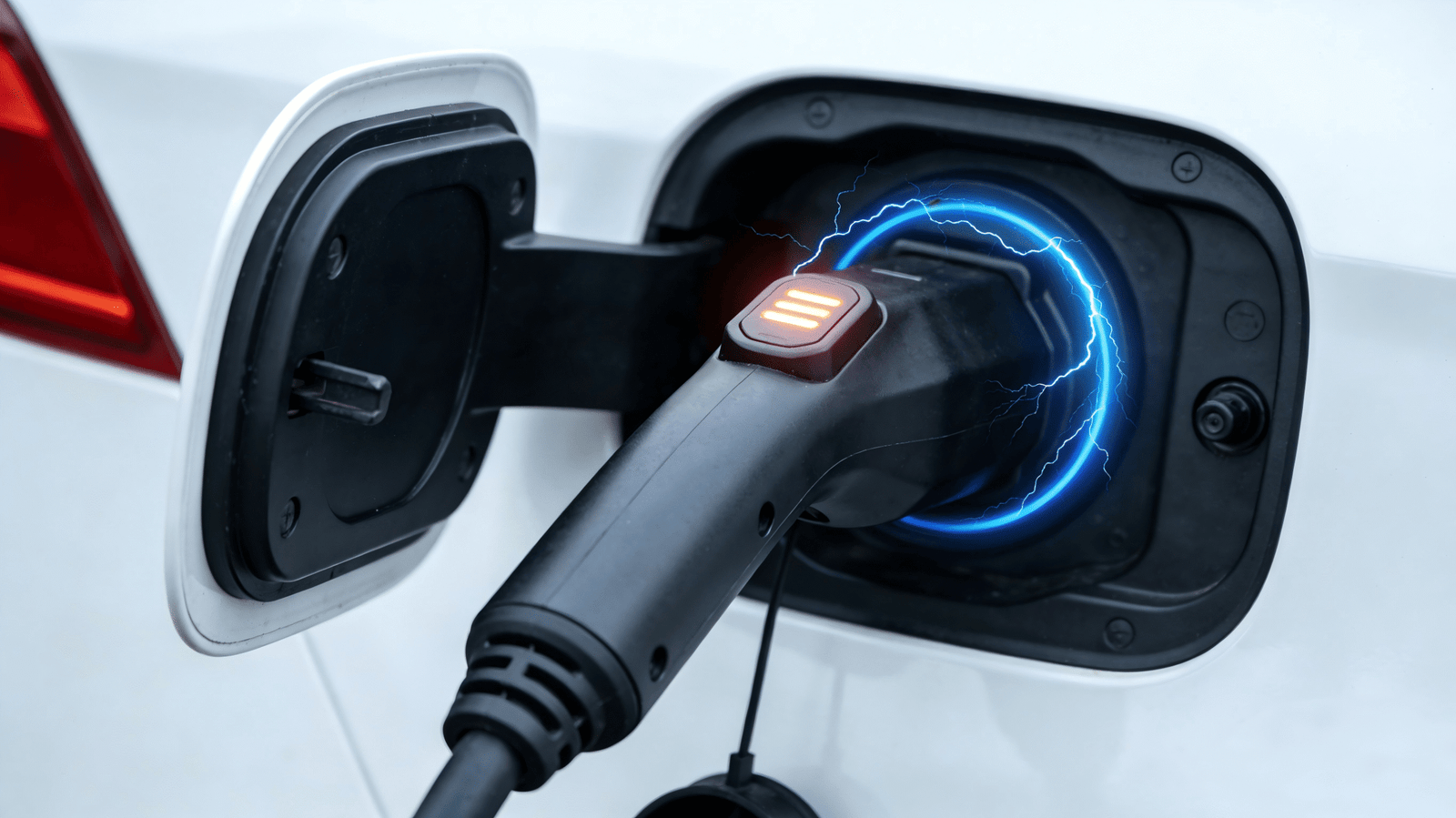
An RCMU, also known as a Residual Current Device (RCD) or Ground Fault Circuit Interrupter (GFCI) in some regions, is an electrical safety device designed to detect and respond to abnormal current leakage in a circuit. In the context of EV charging, the RCMU continuously monitors the balance between the current flowing from the charger to the vehicle and the current returning to the charger.
When a fault occurs—such as insulation breakdown, accidental contact with live components, or moisture intrusion—current may leak to ground rather than following its intended path. The RCMU detects these residual currents (typically as small as 30mA) and instantaneously disconnects power to prevent serious injury or equipment damage. Leading manufacturers like MagTron specialize in developing professional-grade RCMU products engineered to meet the demanding requirements of modern EV charging infrastructure.
How an RCMU Works in EV Charging Systems
The operational principle of an RCMU is elegantly simple yet highly effective. The device uses a toroidal transformer (current transformer) that encircles the supply conductors. Under normal operating conditions, the current flowing through the live conductor is equal to the current returning through the neutral conductor, resulting in zero net flux through the transformer. This balanced state produces no output signal.
However, when any current leaks to ground—the hallmark of a fault condition—the returning current becomes less than the outgoing current. This imbalance creates a net magnetic flux through the toroidal transformer, inducing a voltage in the secondary winding. This induced voltage triggers a sensor, which activates a relay mechanism that opens the circuit and cuts power within milliseconds.
In modern EV charging systems, RCMUs are often integrated with additional monitoring electronics that provide:
- Automatic Testing: Periodic self-tests to verify the device remains functional
- Trip History Recording: Logging of fault events for diagnostic purposes
- Remote Monitoring: Integration with cloud-based systems for real-time alerts
- Communication Protocols: Support for IEC 61851-1 and other international standards
Regulatory Requirements and International Standards
The RCMU is not optional—it’s mandated by safety standards and regulations across virtually every developed market. Key regulatory frameworks include:
European Union: IEC 61851-1 and EN 62752 explicitly require Type A or Type B RCD protection for AC charging stations. Type B devices provide enhanced protection against DC fault currents, which are increasingly important as charging speeds increase.
United States: The National Electrical Code (NEC) Article 625 requires GFCI protection for all personnel, effectively mandating RCMU functionality in EV chargers.
China: GB/T 20234 standards specify residual current protection requirements for all AC and DC charging interfaces.
International: IEC 61936-1 and IEC 62619 establish global baseline requirements for EV charging safety infrastructure.
Non-compliance with these standards can result in chargers being barred from installation, regulatory fines, and crucially, liability exposure in the event of injury or property damage.
Why Every EV Charger Must Have RCMU Protection
1. Protection Against Electric Shock
The primary purpose of an RCMU is to protect users from potentially fatal electric shock. If a user makes contact with a live component due to insulation failure or moisture exposure, the RCMU detects the resulting fault current and disconnects power in 10-30 milliseconds—fast enough to prevent fibrillation and cardiac arrest.
2. Fire Prevention
Residual currents caused by damaged insulation or arc faults can ignite surrounding materials, particularly in outdoor installations or those exposed to weather. By detecting and interrupting these currents before they reach dangerous levels, RCMUs prevent arc initiation and thermal hazards.
3. Equipment Protection
Beyond personal safety, RCMUs protect the EV charger itself and the vehicle’s onboard charging system. Fault currents can degrade electronic components, damage semiconductor devices, and corrupt battery management systems. RCMU protection extends equipment lifespan and prevents costly failures.
4. Compatibility with Energy Storage Systems
As vehicle-to-grid (V2G) and vehicle-to-home (V2H) applications become more common, bidirectional power flow introduces new fault scenarios. Modern Type B RCMUs are specifically designed to detect DC faults that traditional Type A devices might miss, ensuring safety in these advanced use cases.
5. Insurance and Liability Protection
Insurers and fleet operators increasingly require RCMU-equipped chargers as a condition of coverage. From a liability perspective, operators of chargers without proper residual current protection face significant legal exposure in accident scenarios.
RCMU Specifications and Selection Criteria
When selecting an RCMU for an EV charging installation, several technical parameters must be considered:
Sensitivity (Trip Current): Typically 30mA for residential applications and up to 300mA for industrial settings. Lower sensitivity provides better protection but may increase nuisance trips.
Type Classification:
- Type A: Detects sinusoidal AC fault currents and pulsating DC currents. Suitable for standard AC chargers.
- Type B: Detects AC, pulsating DC, and smooth DC fault currents. Essential for DC fast-charging installations.
- Type F: Provides additional protection against high-frequency fault currents from variable-frequency drives and modern power electronics.
Rated Voltage and Current: Must match the charger’s specifications (e.g., 230V/16A for typical European residential chargers, or 400V/32A for three-phase installations).
Response Time: Should comply with relevant standards, typically disconnecting within 30ms at rated fault current.
Test Button and Indicator: Modern RCMUs include manual test functions and LED indicators to verify operational status.
Integration with Smart Charging and Monitoring
Contemporary EV charging infrastructure increasingly integrates RCMU functionality with broader safety and monitoring ecosystems. Advanced chargers now feature:
Continuous Diagnostics: Real-time monitoring of leakage currents below trip thresholds, enabling predictive maintenance and early fault detection.
Cloud Connectivity: Integration with fleet management and building energy management systems for centralized monitoring and compliance reporting.
Data Logging: Detailed event histories supporting incident investigation and regulatory audits.
Cybersecurity Integration: Coordination with authentication and access control systems to prevent unauthorized charging and ensure audit trails.
Common Misconceptions About RCMUs
Misconception 1: “Type A RCMUs are sufficient for all charging applications.”
Reality: Type A devices cannot reliably detect smooth DC faults common in high-power DC fast chargers. Type B protection is increasingly mandated for DC applications.
Misconception 2: “RCMUs cause excessive nuisance tripping.”
Reality: Properly specified and installed RCMUs are highly reliable. Nuisance trips typically indicate upstream power quality issues or incorrect device selection.
Misconception 3: “Adding an RCMU increases charger costs prohibitively.”
Reality: RCMU costs are minimal compared to the liability and insurance benefits. Most chargers integrate RCMU functionality at negligible cost premiums.
Installation Best Practices
Proper RCMU installation is as important as device selection. Key considerations include:
- Certification: Installation must be performed by qualified electricians familiar with relevant standards
- Placement: RCMUs should be positioned as close as possible to the power source to protect the entire downstream circuit
- Load Balancing: In three-phase installations, RCMUs should protect balanced loads to minimize nuisance trips
- Testing: All installations must include functional testing before commissioning
- Maintenance: Regular testing (at least annually) ensures continued protection
The Future of RCMU Technology
As EV charging infrastructure evolves, RCMU technology continues advancing. Emerging developments include:
Selective RCD Systems: Multi-stage protection allowing downstream devices to trip selectively, reducing widespread outages while maintaining protection.
AI-Enabled Diagnostics: Machine learning algorithms analyzing fault patterns to predict component failures and optimize maintenance schedules.
Integration with Vehicle Systems: Coordination between the RCMU and vehicle onboard charger systems for enhanced safety and efficiency.
Renewable Energy Compatibility: RCMUs adapted for installations with solar panels and battery storage, handling the unique fault scenarios these systems present.
Conclusion
The RCMU represents a fundamental pillar of safe EV charging infrastructure. Far from being an afterthought or regulatory checkbox, this device provides critical protection against electrical hazards that could result in injury, death, or property damage. As EV adoption accelerates and charging networks expand, the importance of properly specified and installed RCMUs becomes ever more significant.
For charging network operators, fleet managers, and facility planners, the message is clear: RCMU protection is not negotiable. It’s a regulatory requirement, a safety imperative, and a prudent investment in liability protection. By understanding how RCMUs function, selecting appropriate device types, and following installation best practices, stakeholders can ensure that EV charging infrastructure remains safe, reliable, and compliant with international standards.
As the EV revolution continues its rapid expansion, the humble RCMU—working silently in the background—ensures that this transformation can proceed safely for all users.